
articles

articles

articles

articles


The parts of a comprehensive eye examination vary according to the patient's age, date of last exam, and other factors. Not all parts of the eye exam may be needed or performed, but the first part of the eye exam will include documenting medical history. Here are some eye and vision tests that are likely to be encountered during a comprehensive eye exam:
Visual Acuity Tests
Visual acuity tests measure the sharpness of vision and are usually performed using a projected eye chart to measure the distance visual acuity and a hand-held small acuity chart to measure the near vision (for reading).
Color Blindness Test
A screening test that checks the color vision is often performed early in a comprehensive eye exam to rule out color blindness.
Cover test to check eye alignment.
A test used to assess strabismus or a more subtle binocular vision problem that could cause eye strain or amblyopia (lazy eye).
Ocular Motility (Eye Movements) Testing
Ocular motility testing is performed to determine how well eyes can follow a moving object and/or quickly move between and accurately fixate on two separate targets.
Stereopsis (Depth Perception) Test
This is used to test perception of depth and 3-dimensional structure obtained on the basis of visual information deriving from two eyes by individuals with normally developed binocular vision.
Retinoscopy
This test is used to estimate which lens powers will best correct distance vision. Based on the way the light reflects from the eye, the doctor is able to obtain an approximation of the eyeglass prescription. This test is useful for children and patients who are unable to accurately answer the doctor's questions.
Manual refraction with a phoropter.
This is the test used to determine the exact eyeglass prescription.
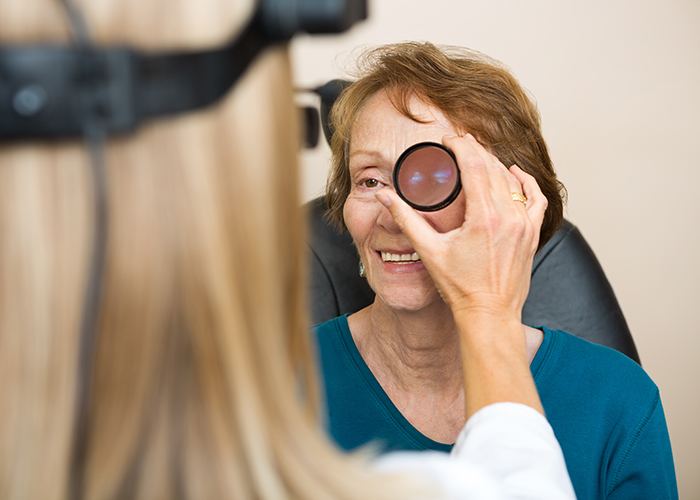
What is Geographic Atrophy ?
Geographic Atrophy (GA) is an advanced form of Dry Age-Related Macular Degeneration (AMD). GA causes cells in your retina to atrophy, leading to vision loss. Typically, GA affects the fovea first, which is the central part of the macula, causing missing spots in your central vision. GA may not cause symptoms until intermediate or advanced stages. This is why comprehensive, yearly eye exams are so important.
What are the symptoms of GA?
While the early stages usually don't cause symptoms, as GA progresses, it can lead to vision changes. Each individual may experiences these changes differently. Some of these include:
- A blank spot in the central vision
- Straight lines appearing wavy
- Colors appearing washed out
- Difficulty seeing at night
How is GA diagnosed?
Your optometrist can diagnose GA during a comprehensive exam including dilation and an Optical Coherence Tomography (OCT) scan. Small changes in your retina can be seen on the scan even during the early stages and even if your are not experiencing symptoms.
Treatments for GA
Presciption eye injections can help slow the progression of GA.

Many patients come to us every day struggling to get through their daily lives with their current choice of vision correction. Some have eyeglasses that do not sit properly on their face or feel that their peripheral vision is hindered by the frames. While contact users may find the lenses uncomfortable or have them fall out at inconvenient times. For these patients, we are pleased to offer orthokeratology, or Ortho-K, a revolutionary way to help you see clearly throughout the day without having to wear glasses or contacts and without having to get laser eye surgery.
What is Ortho-K?
Generations ago, eye doctors knew that the tissue in the eye was soft and somewhat malleable. This knowledge caused them to wonder if they could push the eye back into the proper shape, would an individual be able to see clearly even if they were not wearing their prescription lenses. With the development of gas permeable contact lenses, a few eye doctors began to notice that their patient’s prescriptions did not change as rapidly as previously noted and that they appeared to be able to see correctly even when they were not wearing their contacts.
From these early discoveries, the world of Ortho-K was born. Ortho-K is a special treatment to help patients see clearly even when they are not wearing a prescription lens. Instead, a special gas permeable contact lens is placed into the eye each night before bed and the lens gently pushes the eye into the proper shape while you sleep. In the morning, you can remove the lenses and still see clearly throughout the day. Some patients can even see clearly for up to three days after wearing them for just one night!
Who Should Consider Ortho-K?
There are a number of issues that our patients can have with prescription lenses. If you have one of the following conditions or concerns, call our office today to schedule an appointment.
Allergies to the materials in contact lenses
Dry eye that is made worse by wearing prescription lenses
Dirt or other debris that gets under contact lenses
You play sports and do not want to worry about glasses or contacts
The ability to wake up at night and see clearly
A general dislike of glasses or contacts
How Long Does It Take?
Once you receive your custom Ortho-K contact lenses, it will take anywhere from one to four weeks to fully see all the benefits to your vision that they will provide. However, some of our patients find that their vision has improved after only wearing their lenses for a single night! During the first few days, you may also still need to wear prescription lenses to see clearly enough to drive or get through your normal day, but that is generally quickly resolved. Also, some patients experience some mild discomfort for the first few nights, but as your eyes adjust over a few days, you should no longer be bothered by the feel of your lenses. Is the Procedure Safe? Orthokeratology was approved by the Food and Drug Administration (FDA) in 2002. The procedure is considered safe, effective, and reversible. However, there are some side effects associated with Ortho-K. Most of these side effects are a result of improper cleaning of the lenses that can lead to a minor infection. These infections are usually remedied fairly quickly with the use of antibiotic eyedrops.
Overview
If you are sick and tired of wearing contact lenses or glasses every single day and would like an alternative way to correct your vision, consider trying Ortho-K. If you would like more information on Ortho-K, please call our offices today and see how we can improve your everyday life.

Contact lenses come in a variety of shapes and styles to suit the range of needs for individual patients. What this means is that there is almost certainly a type of contact lens that will both feel comfortable for you and improve your vision.
Some types of contact lenses are known as speciality lenses. This is because they are designed specifically to overcome some eye issues which may prevent a patient from wearing the most common and generic styles of contact lenses. In fact, speciality contact lenses have transformed the vision options of many patients who would otherwise have only had the choice between wearing glasses or undergoing laser vision correction. There are numerous types of speciality contact lens, including scleral lenses.
What are scleral lenses?
Scleral contact lenses get their name from the fact that, unlike regular contacts, they vault over the entire corneal surface and rest on the white part of the eye, which is called the sclera. This makes them larger than standard contacts, which in turn provides a variety of benefits. Their size makes them easier to handle and more stable when on the eye, which in turn provides the patient with sharper and more reliable vision. They are also less likely to become dislodged and come out.
Scleral contact lenses are also gas permeable, which means that oxygen can pass right through them and reach the surface of the eyes. This is important for comfort, particularly for patients who experience dry eyes. The gap that is created between the back of the contact lens and the front surface of the eye can also trap tear film, acting as a fluid reservoir which will keep the eyes moist and healthy.
Types of scleral lenses
Within scleral lenses there are several different sizes to choose between. These are based on where the lenses meet the surface of the eye and are as follows:
Full scleral lenses: the largest type, they provide the greatest amount of clearance between the cornea and lens and rest on the outer sclera.
Mini scleral lenses: the mid-size variety, make contact with the eye on the anterior sclera.
Semi-scleral lenses: although larger than conventional lenses, they are not huge, and the edge of the contact lens rests on the junction between the cornea and the sclera.
Your scleral lens provider will be able to make a recommendation as to the correct size for you, which will be based on your individual requirements.
Who are scleral lenses recommended for?
Although technically anyone can wear and benefit from scleral lenses, they are a particularly good option for patients who have eye conditions or irregularities that for which regular contacts are not suitable. This includes patients with:
Dye eye syndrome. Contact lenses float on a fine layer of tear film, which keeps them comfortable and in position. Patients with dry eye syndrome either do not have enough natural tear film, or what they do have drains away too quickly. This can
make wearing regular contact lenses difficult and uncomfortable. However, the design of scleral lenses keeps moisture on the surface of the eyes, eliminating some of the effects of dry eyes. This makes scleral lenses a great choice for patients with dry eyes.
Irregular corneas. The cornea is the clear dome that covers the front part of the eye and many people have a cornea that is a slightly, or significantly, irregular shape. This causes light to be refracted incorrectly when it enters our eyes, triggering vision problems. Issues arising from irregularly shaped corneas cannot be completely corrected using glasses or conventional contact lenses. Therefore, scleral lenses, which provide sharper and more accurate vision, are recommended.
For more information about scleral lenses, please do not hesitate to call our expert eye care team.

Pink Eye
When you were a kid, did you experience your eyes become reddish and all of a sudden, someone close to you was also suffering from it? Your eyes, as well as those who contracted it, got itchy and swollen, right? Then it must have been that you were suffering from pink eye.
Pink eye is well known as conjunctivitis and it is the infection or inflammation of the conjunctiva or the transparent membrane that serves as a covering for the white part of the eye called the sclera that lines the eyelid. In addition to inflammation, there is usually tearing in the eyes that emits a sticky discharge which develops into a crust while one is sleeping, making it difficult for the patient to open their eyes in the morning.
One thing about the pink eye, which could affect one or both eyes, is that it is highly contagious. While it is more common in children, adults can also victims of this eye condition. Here are the 3 major causes of pink eye:
Bacteria
Streptococci and staphylococci are bacteria types that are most responsible for pink eye. However, chlamydia and gonococci can also cause pink eye. It is accompanied by serious eye pain, itching, swelling, redness, and discharge. The spread of bacterial pink eye is usually as a result of using personal items of infected parties, such as makeup or makeup tools that have been infected with bacteria or putting dirty hands in the eyes. If not treated, it can last for more than 10 days, but if treated, it should resolve in less than 3 days.
Allergies
Pink eye caused by allergies is followed by serious itching and tearing of the eyes. Pain is minimal, but it typically comes with quite a bit of discomfort. Most of the time, pink eye is accompanied by sneezing or coughing. Allergens that trigger pink eyes include grass, dust, pollen, mold, and ragweed. Allergy based pink eye is not usually contagious.
Viruses
Viruses such as the adenoviruses and herpes virus are the most common causes of pink eye. When a virus is the cause, there is usually a lot of teary discharge accompanied by nasal congestion, puffy eyelids, runny nose, and sharp pain. It is usually contracted from cough and sneeze droplets from an infected individual. It can take as long as 2 weeks to treat depending on the seriousness of the infection.
General Symptoms of Pink Eye:
Itchy eyes
Redness of the sclera
Pain
Watery discharge
Swollen eyelids
Hazy or blurry vision
Oversensitivity to light
Prevention
The best way to prevent pink eye is by practicing good hygiene which includes:
Avoid putting dirty hands in your eyes
Make it a habit to wash your hands often
Avoid sharing towels and other personal items
Do not use dirty items
Changing your pillow cover regularly
Do not leave a makeup item open for too long
Avoid sharing makeup items like eyeliners, mascara, etc.
Treatment of Pink Eye
The treatment of pink eye is dependant on its underlying cause. If it is caused by a virus, you just might have to wait for the virus to run its course which could last for about four to seven days. Virus caused pink eye could be easily contracted so it is imperative to try and prevent further spreading. Viruses cannot be cured by antibiotics, but some antiviral drugs could be helpful.
Antibiotics are most effective against pink eye caused by bacteria as they reduce the lifespan of these bacteria and could come in the form of eye drops or pills. Based on the doctor’s prescription, an eye drop should be administered about four to six times daily. It is important you finish using your drugs even after the disappearance of symptoms.
To deal with pink eyes caused by allergies, the allergy should be treated. Once treated, pink eye should disappear. It is also important to avoid allergens as much as possible so as to avoid pink eye.
Whenever the symptoms of pink eye emerge, the best preventive measure is to stay at home until the watery discharge ceases to avoid the spread of the bacteria or virus. You should also visit your doctor immediately to begin treatment. While mild pink eyes generally go away on its own, some of the more serious forms can cause a scar on the cornea.

The eye is a very delicate and fragile part of the body. According to one study on distance vision, about 188.5 million individuals are said to suffer from mild vision impairment, 217 million individuals suffer from moderate and severe impairment while 36 million individuals are blind. For near vision impairment, there are about 826 million individuals suffering. In all, there are about 1.3 billion people living with one of these impairments.
While a lot of people are aware that the eyes are an integral part of the body system, most of them do not pay very close attention to taking care of their eyes and are, in essence, taking it for granted. As the saying goes, “You don't know what you have until it's gone," and therefore, we have decided to take the necessary steps to provide you with information on how to best to take care of your eyesight.
Below are ways to keep your eyes safe:
1. Eat Healthy
Eating a healthy diet is a very integral part of keeping the eyes healthy. Nutrients like lutein, vitamins E and C, omega-3 fatty acids, and zinc may help in preventing eye-related problems like cataracts and macular degeneration. These nutrients can be found in vegetables like collards, kale, spinach, fish like tuna, salmon, and halibut, as well as in beans, nuts, eggs, oranges, pork, and oysters.
Besides eating meals rich in nutrients, it is equally important to eat a well-balanced diet. Obesity can cause diabetes and other medical conditions, leading to blindness or glaucoma. Obesity is also regarded as the chief cause of blindness across the globe which should raise a red flag to watch your weight. You can always visit your doctor to get help with drafting a healthy eating plan.
2. Know your family's medical history
Eye issues are usually hereditary which is why it is important to collect a family history on any diseases that may affect eye health and then report them to your eye doctor. This will help to determine your chances of any future eye conditions as well as come up with an action plan for future eye exams.
3. Avoid Smoking
Smoking, in general, is harmful to your overall health. In regards to your eyes, it can cause macular degeneration, destroy the optic nerve, and cause cataracts. It can even lead to vision loss. Quitting smoking if you already smoke, or better yet, not even starting, will be extremely beneficial to your overall health and wellness.
4. Wear Sunglasses
Sunglasses are more than just fashion accessories, they are vital in protecting the eyes from ultraviolet rays emitted from the sun. UV rays can cause macular degeneration and even cataracts which is why it is important to wear sunglasses that protect against 99% -100% of UV rays.
5. Obey workplace safety precautions
It is important we wear protective eye gears when engaging in sporting activities or jobs that could be harmful to the eyes. Such eyewear includes safety goggles, glasses, and helmets. Most of these protectors are from polycarbonates, which is a much stronger material than plastic.
6. Rest your eyes
Just like our bodies, the eyes also need rest to perform optimally. Depriving yourself of adequate sleep and rest can have an adverse effect on the eyes. During the use of the computer, remember to rest the eyes for at least 20 seconds after every 20 minutes by looking away from the screen. Doing this will reduce eye strain.
7. Visit your eye doctor regularly
Getting regular eye exams is one of the most important things you can do for your eye health. Conditions like glaucoma are much easier to treat if they are discovered early so don’t stay far from your doctor.
First Aid
Eye injuries can happen at any time and it is good to know how to handle such emergencies until you can reach a medical professional.
If you get hit on the eyes, you should put a shield like a Styrofoam cup on the bone of the eyes. Avoid putting pressure on the eye
If something enters your eyes, avoid removing it as it may lead to the tearing of important tissue in the eyes. A Styrofoam cup would also do the job here until you can get to a medical professional.
In the case of a black eye, putting an ice pack on the eye will help to reduce bruising and swelling
If it’s a chemical burn, rinse the eyes with clean water for about 30 minutes, holding your head beneath the tap. While rinsing, keep your eyes wide open, rolling your eyeballs in all directions so as to ensure the water gets to every part.
So give some of these tips a try and remember to schedule regular eye exams. Prevention is always a better alternative to trying to find a cure.

Macular Degeneration
Macular degeneration, commonly referred to as age-related macular degeneration (AMD), is the single largest cause of sight loss in the developed world and affects more than 10 million Americans. It usually affects people over the age of 60, but has been known to affect those who are younger. It is a painless condition that usually affects both eyes with the loss being experienced in the central vision. It does not affect the peripheral vision, meaning that it does not cause total blindness.
What is the macula?
The macula is the most sensitive part of the retina and is responsible for our central vision and what allows us to see fine details with clarity.
Varieties of AMD
Wet AMD
Wet AMD is one variety of the condition in which abnormal blood vessels grow into the macula, leaking blood or fluid which then causes scarring and a rapid loss of central vision. Wet AMD can develop suddenly and rapid referral to a specialist is essential as it can be treated if caught quickly.
Dry AMD
Dry AMD is the most common variety of age-related macular degeneration and is a gradual deterioration of the retina as the cells die off over time and are not regenerated. Up to 15% of people with dry AMD go on to develop wet AMD, and so any sudden changes in your vision should be followed up with your optometrist as soon as possible.

Clean eyes are healthy eyes. Nevertheless, our eyes are exposed to countless potentially harmful microorganisms during the course of an ordinary day. This could be anything from dust and pollen, which could cause allergies, or infection-causing bacteria. Daily cleansing is the best way to keep eyes clean and free from debris, but to maximize the effects of your cleaning, it’s important to use products that are designed just for your eyes. Thankfully, there is OCuSOFT.
A large part of the OCuSOFT product line is a selection of non-irritating products that are designed specifically to help remove any oil, debris and pollen from the eyelids and eyes, leaving them as clean and healthy as possible. Here are some of the products that you may be interested in:
OCuSOFT Lid Scrub
One of the most popular product categories in the OCuSOFT line, this lid scrub takes the form of a foaming eyelid cleaner. The instant foaming formula helps to remove oil, debris, pollen and contaminants and should be used with a new, soft, clean cleansing pad for each eye. Choose the Platinum Foam variety for extra-strength and additional anti-inflammatory properties that helps to soothe eyes and remove irritation as soon as it is applied.
OCuSOFT Lid Scrub Pre-Moistened Pads
These extra-strength pads are a leave-on formula. Simply place them onto your eyes and relax. While you do so, the formula cleanses your eyelids and removes any contaminants to provide relief from irritation. This product is recommended for moderate to severe eyelid conditions.
OCuSOFT HypoChlor
This product is available as both a gel and a spray and should be used in combination with a surfactant such as OCuSOFT’s lid scrub for the greatest possible level of cleanliness.
OCuSOFT Dry Eye mask
As the name of this product suggests, this mask is designed to help combat a condition called dry eye. Dry eye occurs when the eyes don’t make enough tear film, the quality of the tera film is compromised or it drains away too quickly. The OCuSOFT dry eye mask is a moist heat mask that contains a patent-pending cross hatch design proven to deliver even heat distribution across the eyes. This warmth helps to break up any hardened oil deposits in the meibomian glands that may be contributing towards dry eye.
For more information on keeping your eyes clean and healthy, or to find out more about OCuSOFT products, please speak to our dedicated and professional eyecare experts.

Corneal refractive therapy, also known as CRT, is a simple, painless treatment for refractive eye errors like myopia and has two core benefits. First, it can be used to help patients see clearly during the day without using glasses or contact lenses, giving them the freedom and flexibility that they need to live life to the fullest. Second, CRT has been shown to help slow the progression of myopia, keeping prescriptions under control and potentially reducing the likelihood of patients developing serious eye health problems associated with high myopia in the future.
Here’s everything that you need to know about corneal refractive therapy and what it means for you.
Understanding refractive eye problems
Refractive eye problems like nearsightedness, farsightedness and astigmatism are extremely common, with nearsightedness – also known as myopia – being the most common of all. Patients with myopia can see nearby objects clearly, but those further away become progressively more blurred. Refractive eye errors occur when the shape of the clear dome covering the front part of the eye, called the cornea, impair the light-bending and focusing process in your eyes. This leads to the light ending up in the wrong place inside the eye, and the message that is sent to our brain from our eyes is muddled, causing blurred vision.
What is corneal refractive therapy?
Corneal refractive therapy was initially developed as a treatment to correct and slow the progression of nearsightedness. However, it has also been found to be effective at controlling other refractive errors, including farsightedness, astigmatism and an age-related refractive condition called presbyopia.
CRT is a non-invasive, painless and straightforward method of correcting patient vision so that they don’t need to wear contacts or glasses, and they don’t need laser vision correction surgery to see clearly. CRT uses special contact lenses that are worn overnight and apply light pressure to the cornea in order to reshape it so that light is refracted correctly, and the image sent from the eyes to the brain is clear. The cornea is able to retain this new shape even after the contact lenses are removed the next morning, meaning that you can continue to see clearly for several hours. The more consistently you wear your CRT lenses overnight, the longer your eyes will learn to retain their new shape and eventually, patients can enjoy up to 48 hours of clear vision without using prescription lenses. However, the effects aren’t permanent so if you stop wearing the lenses, your vision will gradually return back to normal over the course of a few days.
Slowing the progression of myopia with corneal refractive therapy
Another key benefit of CRT is that it can actually help to slow the progression of myopia. Most people who are nearsighted find that their eyesight gets progressively worse as they get older. This deterioration may not be rapid, but it can end in patients requiring high prescriptions. Studies have found that patients who have high myopia are more likely to develop serious eye problems in the future, including glaucoma, macular degeneration, cataracts and a detached retina. Regular use of your corneal refractive therapy lenses could help keep your prescription stable and lower your risk of developing these problems.
Am I a candidate for corneal refractive therapy?
You may be a candidate for corneal refractive therapy if you:
Have a myopia prescription within specific parameters
Have a prescription for hyperopia, presbyopia or astigmatism within specific parameters
Have stable vision, which means that your prescription hasn’t changed during the last two years
Are not a suitable candidate for laser vision correction
Have a job that makes it impractical or unsafe to wear glasses or contact lenses
Enjoy hobbies that make it impractical or unsafe to wear glasses or contact lenses
Have healthy eyes and are generally in good health
For more information, please contact our friendly and knowledgeable team today.

Contact Lens Exam
If you’ve never worn contact lenses before, it can seem a bit intimidating. After all, you’re inserting something into your eye! Let’s ease your mind about the first step – your contact lens exam. This post will walk you through what’s involved in a contact lens exam and what you can expect every step of the way.
It begins with a comprehensive eye exam.
Your eye doctor will first determine your overall eye health and vision. This includes a discussion of your health history and then a series of standard eye tests. These tests will evaluate eye focusing, eye teaming, depth perception, color vision, peripheral vision, and the response of your pupils to light. The doctor will also measure your eye’s fluid pressure to check for glaucoma, evaluate your retina and optic nerve, and test your vision with different lenses to assess whether contact lenses can improve your vision.
Then, a discussion about your contact lens preferences.
If contact lenses are appropriate for you, it’s time to talk about your contact lens preferences. For example, do you want to enhance or change your eye color? Would you prefer daily disposable lenses or overnight contacts? Ask about the benefits or drawbacks of each, so that you make the best decision. If you’re over 40, your doctor will likely discuss age-related vision changes and how contact lenses can address these issues.
Next, the eye doctor will conduct eye surface measurements.
Contact lenses require precise measurements of your eyes to fit properly. Using an instrument called a keratometer, your doctor will measure the curvature of your eye's cornea, the clear front surface of your eye. Next, the size of your eyes pupil is measured using a card or ruler showing different pupil sizes which is held next to your eye to determine the best match.
You may also need a tear film evaluation.
If you have dry eyes, your eye doctor will perform a tear film evaluation to measure the amount of tear film on the surface of your eye. If your tear film is insufficient or you have chronic dry eyes, contact lenses may not be a good option for you. However, some newer contact lenses deliver moisture to the surface of the eye, making them a better choice for individuals with dry eye issues.
It's time for the contact lens fitting.
The final step is to fit you with a trial pair of contact lenses. Once inserted, your eye doctor will examine the lenses in your eyes to ensure a good fit. He/she will check the alignment and movement of the lenses on the surface of your eye and if the fit looks good, the last step is to ensure the prescription is correct with a few more tests.
Now it’s your turn to test it out.
Your contact lens exam is over, but you’ll need to come back. Your doctor will usually have you wear the trial lenses for a week. After that, you’ll have a short follow-up exam to confirm that the lenses are working well for you and you can then order a supply of contact lenses. If this is your first contact lens exam, don’t worry. Choose a qualified optometrist and they’ll answer all your questions as you go. Just be sure to let them know you’re interested in contact lenses so that they know to allow for extra time in your appointment for the consultation and any specialized tests.


Office Hours
Mon: 12:00 PM to 6:00 PM
Tue: 10:00 AM to 4:00 PM
Wed: 10:30 AM to 4:00 PM
Thu: 10:00 AM to 4:00 PM
Fri - Sun: Closed
Doctor's Hours
Mon: 12:30 PM - 6:00 PM
Tue: 10:00 PM - 4:00 PM
Wed: 11:30 AM - 4:00 PM
Thu: 10:00 PM - 4:00 PM
Powered by 